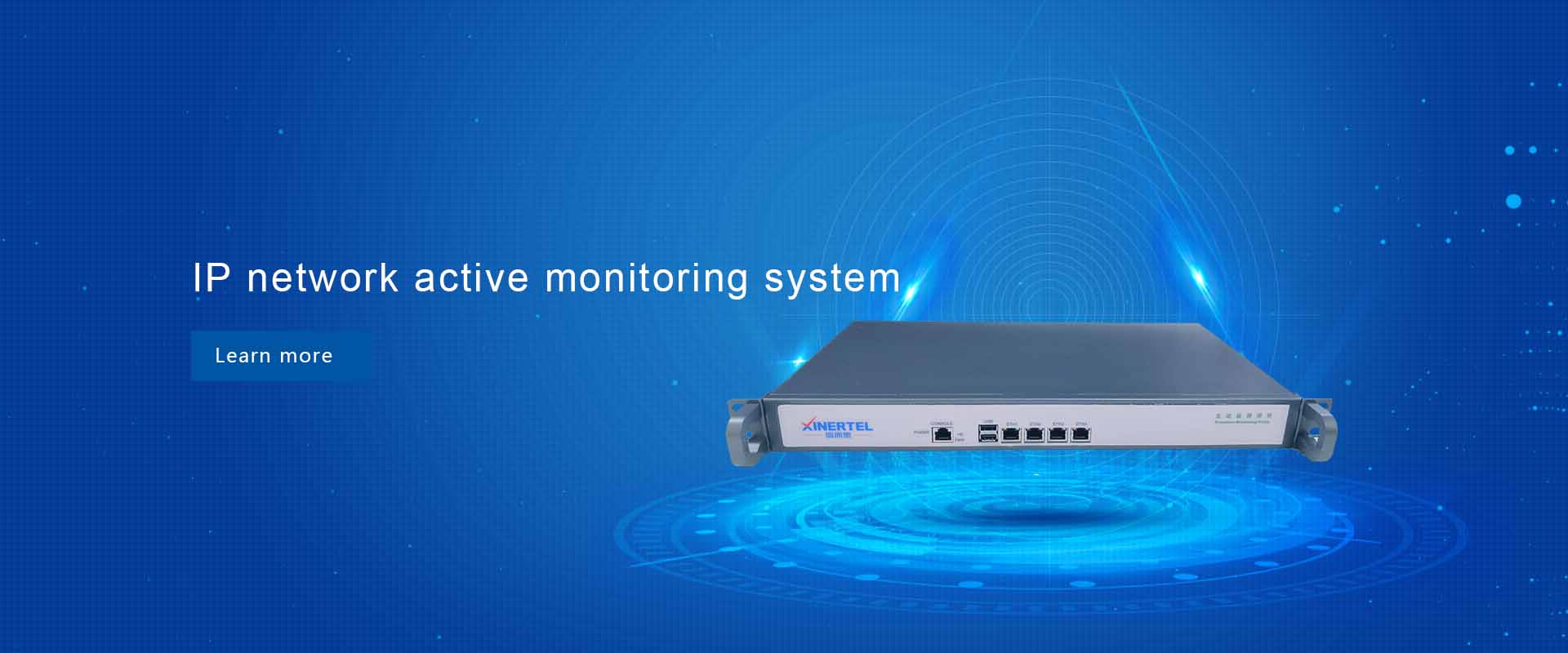
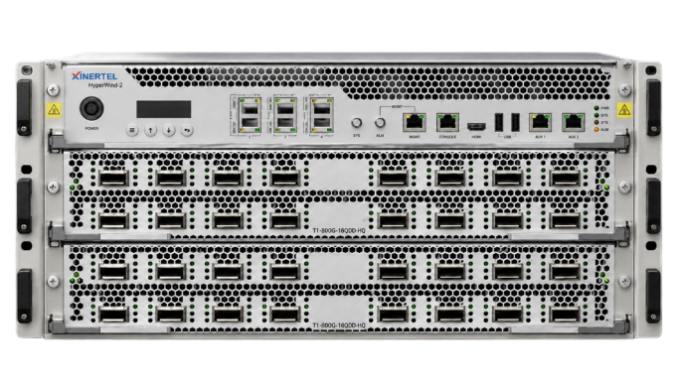
HyperWind-2
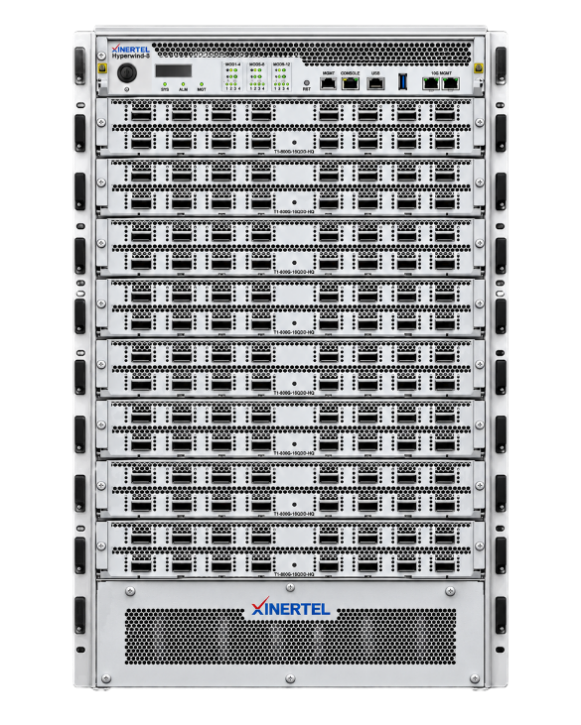
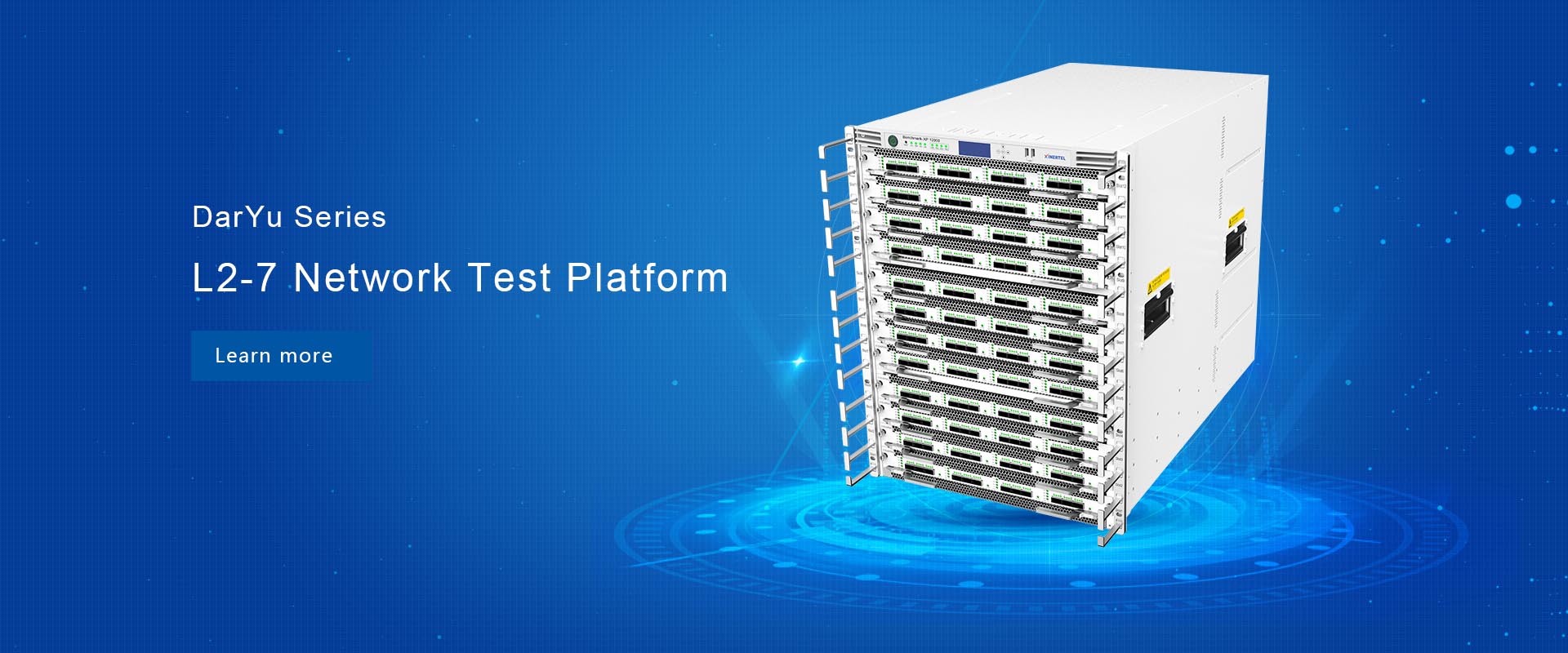
HyperWind-8
Beijing, October 30, 2026 — Xinertel introduced HyperWind, a flagship high-speed network test platform developed to address the testing requirements arising from large AI models, AI computing centers, and high-performance computing (HPC).
As networks migrate from 400G toward 800G and 1.6T, rising bandwidth and port density require devices to deliver not only greater throughput but also sustained high concurrency, low latency, and long-duration operational stability. Built around 100-Terabit-class performance and high-density 1.6T/800G interfaces, HyperWind combines modular hardware with continuously evolving software capabilities to provide a unified platform for the R&D validation, performance evaluation, and complex-scenario testing of high-speed network equipment.
Scalable Architecture for Extreme Network Performance
HyperWind is available in two chassis configurations—the 2-slot HyperWind-2 and the 8-slot HyperWind-8—covering workloads from benchtop validation to large-scale network deployments.
The HyperWind-8 supports up to 64 x 1.6T ports or 128 x 800G ports per chassis and delivers 102.4T of full line-rate traffic, enabling 100-Terabit-class concurrency, extreme forwarding performance, and extended stability testing—conditions required to validate the aggregate performance of large switches and AI computing networks.
Sustained full-load operation tends to expose issues that momentary peak loads do not. To address this, HyperWind adopts an orthogonal, backplane-free architecture, direct high-current copper busbar power delivery, and a floating heat-sink design. Power supplies, fan trays, and service modules are modular and field-replaceable, providing the hardware foundation for continuous, 24/7 stress testing.
High-Density Interfaces for 800G and 1.6T Networks
As the number of high-speed ports continues to grow, conventional test configurations increasingly depend on additional instruments and greater rack space; at the same time, the long-term coexistence of deployed and next-generation rates requires test resources that can evolve incrementally.
HyperWind addresses both requirements with high-density service modules: the 1.6T test module provides up to eight 1.6T ports per board, while the 800G test module provides up to sixteen 800G ports and 12.8 T of traffic per board. An 8-slot chassis can therefore be configured for a 64 x 1.6T or 128 x 800G test environment. Standalone 400G and 100G test modules are also planned, allowing customers to align test resources with existing deployments and upgrade schedules.
Comprehensive Traffic Testing for AI Computing Networks
Beyond high-speed traffic generation and analysis, HyperWind supports packet statistics, capture, throughput, and latency testing. For AI computing networks, it provides RoCEv2 traffic emulation and validates lossless networking mechanisms including PFC, ECN, and DCQCN, and can reproduce collective communication and Incast scenarios to help locate performance issues under high load and congestion.
A Unified Software Roadmap from Protocol Testing to Application Validation
HyperWind combines a unified hardware architecture with a multi-layer testing strategy. Powered by Xinertel's Renix software platform, the system currently supports Layer 2–3 high-speed traffic testing and routing and switching protocol emulation covering BGP, OSPF, IS-IS, MPLS, VXLAN, and EVPN. The platform also supports established benchmarking methodologies, including RFC 2544 and RFC 2889, for functional and performance evaluation. Future releases will integrate the Layer 4–7 application testing capabilities of ALPS, extending validation from high-speed traffic and network protocol testing toward coordinated protocol and application-layer testing.
Flexible Deployment and Automation for Evolving Test Requirements
Testing requirements often change with project scale, while fixed hardware configurations can limit resource reuse and expansion. HyperWind supports flexible deployment from two to eight slots and permits additional chassis to be cascaded for further resource expansion. Combined with remote management and the open Renix API, which supports Python and Tcl integration, this enables teams to convert repetitive manual tests into repeatable automated regression flows while preserving headroom for future expansion.
Designed for Next-Generation Network Validation
With its high-density interfaces, 102.4T line-rate traffic capability, modular architecture, and unified software roadmap, HyperWind is designed to support a broad range of applications, including:
· AI computing network design, deployment, and validation
· R&D and performance evaluation of high-end switches and routers
· Data center network upgrades and next-generation Ethernet deployments
· Network protocol and application service validation
· Automated regression testing and laboratory capacity expansion
HyperWind Product Portfolio
The following table lists the current and planned HyperWind products, covering chassis and test modules.
Category | Product | Specification |
Chassis | HyperWind-2 chassis | 2-slot chassis with built-in control module, power supplies, and fan modules |
Chassis | HyperWind-8 chassis | 8-slot chassis with built-in control module, power supplies, and fan modules |
Test module | T1-1.6T (8-port) | 100G / 200G / 400G / 800G / 1.6T |
Test module | T1-800G (16-port) | 50G / 100G / 200G / 400G / 800G |
Test module | T1-400G (20-port) | 50G / 100G / 200G / 400G |
Test module | T1-100G (32-port) | 10G / 25G / 40G / 50G / 100G |
The T1-400G and T1-100G modules are planned products; specifications and availability are subject to official release.
Previous: None